
What My Conversation with Henry Exham Made Me Think About Flipped Learning
Jun 15, 2026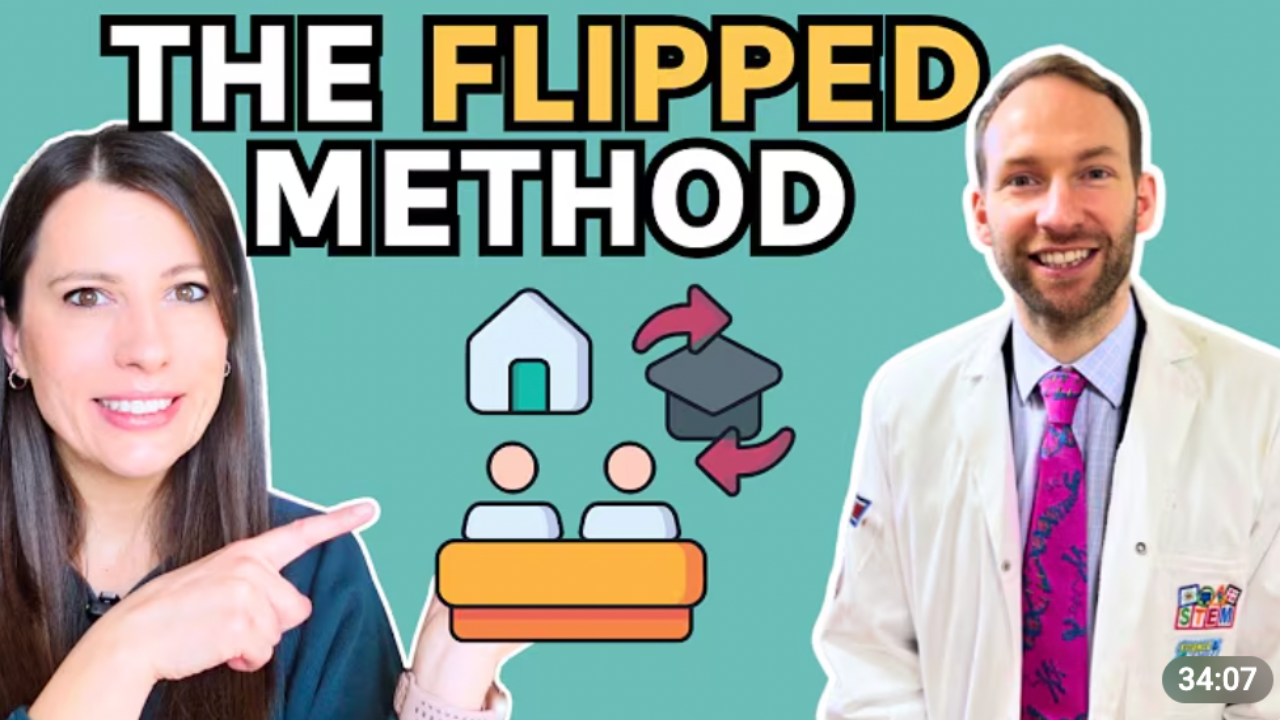
As teachers, we often find ourselves battling the same problem: there never seems to be enough lesson time.
Curriculums are packed. Exam specifications are content-heavy. Students need more practice, more feedback, and more opportunities to apply their knowledge. Yet many of us still spend a significant proportion of our lessons delivering content.
Recently, I sat down with Henry Exham to discuss flipped learning, and our conversation left me reflecting on a question that has followed me throughout much of my teaching career:
Are we using lesson time for the things that matter most?
The Problem with Traditional Lesson Time
Most lessons follow a familiar pattern.
We introduce new content, explain key concepts, model examples, check understanding, answer questions, and then, if we're lucky, students get some time to apply what they've learned.
There is absolutely nothing wrong with direct instruction. In fact, clear teacher explanations are essential.
But in content-heavy subjects, it can leave very little time for the deeper thinking students need to become successful.
The challenge isn't that we're explaining too much.
The challenge is that lesson time is finite.
What Flipped Learning Tries to Solve
One of the themes that emerged from my conversation with Henry was the idea of moving some of the initial content exposure outside of the classroom.
Rather than encountering a topic for the first time in a lesson, students engage with core material beforehand through videos, reading, guided notes, or other structured activities.
This means lesson time can be used differently.
Instead of focusing primarily on content delivery, teachers have more opportunities for:
- Exam practice
- Application questions
- Discussion
- Feedback
- Addressing misconceptions
- Higher-order thinking
For many teachers, that shift is incredibly appealing.
The skills students often struggle with most are rarely the simple recall of information. It's applying knowledge, analysing data, evaluating evidence, and communicating ideas effectively.
Those are exactly the areas that benefit from teacher support.
The Challenge: Getting Students to Engage
Of course, the biggest question whenever flipped learning is discussed is:
"What if students don't do the preparation?"
It's a fair concern.
The success of any flipped learning approach relies on students engaging with the pre-lesson material. Without that foundation, lessons can quickly become difficult for both students and teachers.
What struck me during our discussion was that successful flipped learning isn't simply about assigning homework.
It requires careful planning.
Students need clear expectations. They need to understand why the preparation matters. The tasks need to be manageable and purposeful rather than feeling like extra work added onto an already busy schedule.
Like any classroom routine, it takes time to establish.
Creating More Independent Learners
Another idea we explored was the role flipped learning can play in developing independence.
As teachers, we often talk about wanting students to take ownership of their learning.
But independence doesn't appear overnight.
It has to be taught.
When students are expected to engage with content before lessons, identify areas they don't understand, and arrive ready to participate, they begin developing habits that support lifelong learning.
That doesn't mean leaving students to figure things out alone.
It means gradually giving them more responsibility while still providing the structure and support they need to succeed.
A Shift in How We Think About Lesson Observations
One particularly interesting part of our conversation moved beyond flipped learning altogether and into teaching and learning more broadly.
Many schools are increasingly moving away from observations that focus purely on what is visible in a lesson.
Instead, there is a growing emphasis on understanding the thinking behind teaching decisions.
Why has a teacher chosen a particular activity?
How does it support learning?
What evidence or research informed that choice?
This reflects a wider shift towards evidence-informed practice and the science of learning.
Rather than focusing on whether a lesson looks engaging, the conversation becomes about whether it is helping students learn effectively.
Personally, I think that's a positive direction.
Teaching Through the Lens of Learning
The phrase "science of learning" is often used in education, but at its heart, it's a simple idea.
Teaching decisions should be informed by what we know about how students learn.
That might include:
- Retrieval practice
- Cognitive load
- Spacing
- Modelling
- Deliberate practice
- Feedback
Whether you use flipped learning or not, these principles can help shape lessons that maximise learning rather than simply covering content.
And perhaps that's the bigger takeaway.
The conversation wasn't really about videos, homework, or lesson structures.
It was about being intentional.
Being intentional with lesson time.
Being intentional with planning.
And being intentional about ensuring students spend as much time as possible thinking, applying, questioning, and learning.
Final Thoughts
Flipped learning won't be the right solution for every teacher, every class, or every school.
But it does force us to ask some important questions.
Could some of the content we're delivering in lessons be accessed elsewhere?
Are we making the best use of our limited classroom time?
And how can we create more opportunities for students to engage in the kinds of thinking that actually drive progress?
My conversation with Henry certainly gave me plenty to think about.
Perhaps the most important reminder was this: effective teaching isn't about doing more.
It's about making the time we already have count.
Listen to the Full Conversation with Henry Exham
If you'd like to hear the full discussion, including our conversation about flipped learning, independent learning, lesson observations, and the science of learning, you can listen or watch the interview below.
🎧 Listen to the podcast episode here
👉 Watch the full interview on YouTube here
Whether you're considering introducing flipped learning into your classroom or simply interested in how teaching and learning is evolving, there are plenty of practical takeaways throughout the episode.
Want to Save Time Planning A-Level Biology Lessons?
If you've found this post helpful, why not take a look inside one of my done-for-you AQA A-Level Biology lessons completely free?
I know investing in teaching resources can feel like a risk. We've all downloaded resources that promised to save time and ended up creating more work. That's why I've made one of my full AQA lessons available for free so you can see exactly how they're structured before committing to anything.
Free Lesson: Carbohydrates
In this free lesson walkthrough, I'll take you through:
✔️ The complete lesson resource pack
✔️ How I teach the lesson in practice
✔️ The structure and flow of the lesson
✔️ Retrieval, questioning and exam-focus strategies
✔️ Exactly what students see and do during the lesson
Whether you're teaching A-Level Biology for the first time or simply looking to reduce your planning workload, this will give you a clear idea of how my resources can support you.
👉 Get the free Carbohydrates lesson and walkthrough here
Get Free Teaching Tips Straight to Your Inbox
When you download the lesson, you'll also join my email community where I share:
-
Time-saving teaching strategies
-
A-Level Biology revision tips
-
Exam board insights and updates
-
Classroom ideas you can use immediately
-
New resources and free training
Simply enter your name and email to get instant access.
Less planning. More evenings back.
Frequently Asked Questions About Flipped Learning
What is flipped learning?
Flipped learning is an instructional approach where students engage with core content before the lesson, often through videos, reading, or guided notes. Lesson time is then used for application, discussion, feedback, problem-solving, and deeper thinking.
Does flipped learning actually work?
Research suggests flipped learning can be highly effective when implemented well. By exposing students to content before lessons, teachers can spend more classroom time addressing misconceptions, developing exam skills, and supporting higher-order thinking.
What are the benefits of flipped learning?
Some of the key benefits include:
- More lesson time for application and exam practice
- Increased student independence
- More opportunities for feedback
- Improved engagement with challenging content
- Better use of classroom time
What if students don't complete the pre-lesson work?
This is one of the most common concerns teachers have. Successful flipped learning relies on clear expectations, manageable tasks, and consistent routines. When students can see the value of the preparation during the lesson, engagement is often much higher than teachers initially expect.
Is flipped learning suitable for secondary schools?
Yes. Flipped learning is particularly effective in content-heavy subjects such as Biology, Chemistry, Physics, Maths, History, and Geography, where curriculum time is limited and students need regular opportunities to apply knowledge.
Does flipped learning increase teacher workload?
There can be some initial investment in creating or sourcing pre-lesson materials. However, many teachers find that flipped learning reduces workload over time by creating more efficient lessons and allowing misconceptions to be addressed during class rather than through extensive marking afterwards.
Can flipped learning improve exam performance?
Many teachers use flipped learning to create more lesson time for exam questions, data analysis, extended responses, and application tasks. This can help students develop the skills needed for success in assessments rather than simply covering content.
What is the science of learning?
The science of learning refers to evidence-informed approaches based on how students learn most effectively. This includes principles such as retrieval practice, cognitive load theory, spacing, modelling, feedback, and deliberate practice.
How are lesson observations changing in schools?
Increasingly, lesson observations are focusing less on visible activities and more on the rationale behind teaching decisions. Schools are placing greater emphasis on evidence-informed practice and how lessons support learning rather than simply how they appear.
Author


